Why Maharashtra Dominates India's FDI Landscape
Maharashtra is not merely India's financial capital — it is the country's undisputed leader in attracting foreign direct investment. In FY 2024-25, the state attracted INR 1,64,875 crore (approximately USD 19.6 billion) in foreign investment, representing 40% of India's total FDI inflows. That figure marked a 32% increase over the previous year and cemented Maharashtra's position ahead of Karnataka, Gujarat, Delhi, Tamil Nadu, and Haryana.
Several structural factors drive this dominance: Mumbai's status as a global financial hub, a port infrastructure that handles over 50% of India's container traffic, a skilled workforce of over 20 million, and industrial infrastructure spread across 289 MIDC industrial areas. But the real game-changer for foreign investors in 2025 is the state's overhauled industrial policy.
MIISP 2025: Maharashtra's New Industrial Policy Framework
On December 31, 2025, the Government of Maharashtra formally launched the Maharashtra Industries, Investment and Services Policy (MIISP) 2025, replacing the earlier Package Scheme of Incentives (PSI) 2019. The new policy sets ambitious targets: INR 70.5 trillion in cumulative investments and 5 million new jobs by the end of the decade.
For foreign companies evaluating India market entry, the MIISP 2025 represents a significantly more attractive proposition than its predecessor. The incentive structure has been redesigned around four core pillars: fiscal incentives, land facilitation, infrastructure support, and single-window clearance through the MAITRI 2.0 digital platform.
Unit Classification System
Under MIISP 2025, every industrial unit is classified into one of five categories based on Fixed Capital Investment (FCI) and direct employment. This classification determines the quantum and duration of incentives available:
| Category | Key Criterion | Incentive Level |
|---|---|---|
| Micro, Small & Medium Enterprises (MSMEs) | As per GoI MSME classification | Standard package |
| Large Scale Industries (LSI) | Above MSME threshold | MSME-equivalent incentives |
| Special Large Scale Industries (Special LSI) | Higher FCI or employment thresholds | Enhanced package with 100% SGST reimbursement |
| Mega Projects | FCI or employment above prescribed limits | Customized package by Cabinet Sub-Committee |
| Ultra-Mega Projects | Highest FCI or employment tier | Bespoke package approved by Chief Minister-led committee |
The classification also factors in the geographic zone where the unit is located. Maharashtra divides its districts into developed, developing, and emerging categories, with progressively higher incentives for units in less-developed regions.

Core Fiscal Incentives for Foreign Companies
The fiscal incentive structure under MIISP 2025 is among the most competitive in India. Here is what foreign companies can expect:
Industrial Promotion Subsidy (IPS)
This is the flagship incentive — a 100% reimbursement of gross SGST (State Goods and Services Tax) payable by the unit. For manufacturing companies with significant domestic sales, this effectively reduces the state tax burden to zero during the incentive period. Special LSI units receive this benefit automatically, while Mega and Ultra-Mega projects can negotiate enhanced terms.
Stamp Duty Exemption
Foreign companies setting up operations in Maharashtra receive 50% to 100% stamp duty exemption on land and property transactions, depending on the area classification. Units in emerging districts (27 districts identified as priority) receive full 100% exemption. Given that stamp duty in Maharashtra ranges from 5% to 7% of property value, this translates to significant savings on land acquisition costs.
Electricity and Power Incentives
The policy provides two distinct power-related benefits. First, a 100% electricity duty waiver for a period of 15 years for eligible units. Second, an electricity tariff subsidy that brings industrial power costs closer to competitive levels, particularly important for energy-intensive manufacturing sectors.
Employment-Linked Subsidies
To incentivize job creation, MIISP 2025 offers a 50% reimbursement of the employer's contribution to the Employee Provident Fund (EPF) for up to 10 years. For Special LSI projects, this reimbursement is capped at INR 100 million per year per unit. Additional employment-linked incentives are available for hiring women employees and workers from Scheduled Caste/Scheduled Tribe communities, with a 5% to 20% additional incentive depending on the location.
Interest Rate Subsidy
Eligible units receive an interest rate subsidy of 4% per annum for 10 years on term loans taken for setting up the industrial unit. This applies to loans from scheduled commercial banks and financial institutions, significantly reducing the effective cost of capital for greenfield projects.
Special Economic Zones in Maharashtra
Maharashtra operates 38 operational Special Economic Zones — the highest concentration of any Indian state. These zones offer a distinct regulatory and fiscal environment that stacks on top of the state-level MIISP incentives.
Key SEZs for Foreign Investors
SEEPZ (Santacruz Electronics Export Processing Zone): Located in Mumbai's Andheri East area, SEEPZ is India's oldest export processing zone, specializing in electronics, gems, and jewellery exports. It permits 100% FDI in most sectors and provides ready-built factory spaces with plug-and-play infrastructure.
Navi Mumbai SEZ (NMSEZ): Considered one of India's best-connected SEZs, NMSEZ benefits from proximity to Jawaharlal Nehru Port Trust (JNPT) — India's largest container port — along with rail, road, and the upcoming Navi Mumbai International Airport. The zone is ideal for manufacturing companies requiring multimodal logistics connectivity.
AURIC (Aurangabad Industrial City): A greenfield industrial smart city spread over 10,000 acres, AURIC is India's first integrated smart industrial city under the DMIC (Delhi-Mumbai Industrial Corridor) project. With underground plug-and-play infrastructure, 60% of the land is designated for industrial use across textiles, food processing, defence, engineering, and electronics sectors. The remaining 40% is allocated for residential, commercial, and social infrastructure.
SEZ Benefits for Foreign Companies
Companies operating within Maharashtra's SEZs enjoy several additional advantages beyond state incentives:
- Duty-free imports: Raw materials and capital goods can be imported without customs duty, eliminating a major cost for export-oriented manufacturing
- Income tax benefits: SEZ units receive income tax deductions on export profits under Section 10AA of the Income Tax Act (100% deduction for first 5 years, 50% for next 5 years)
- Streamlined customs: Simplified licensing and customs clearance procedures reduce administrative delays
- GST exemption: Supplies to SEZ units are zero-rated under GST, reducing input costs
- Single-window clearance: Dedicated development commissioners handle all approvals within the zone
To establish a multi-product SEZ in Maharashtra, the minimum investment threshold is INR 1,000 crore or net worth of INR 250 crore — relevant for large foreign corporations considering captive zone development.
MIDC: Industrial Land and Infrastructure
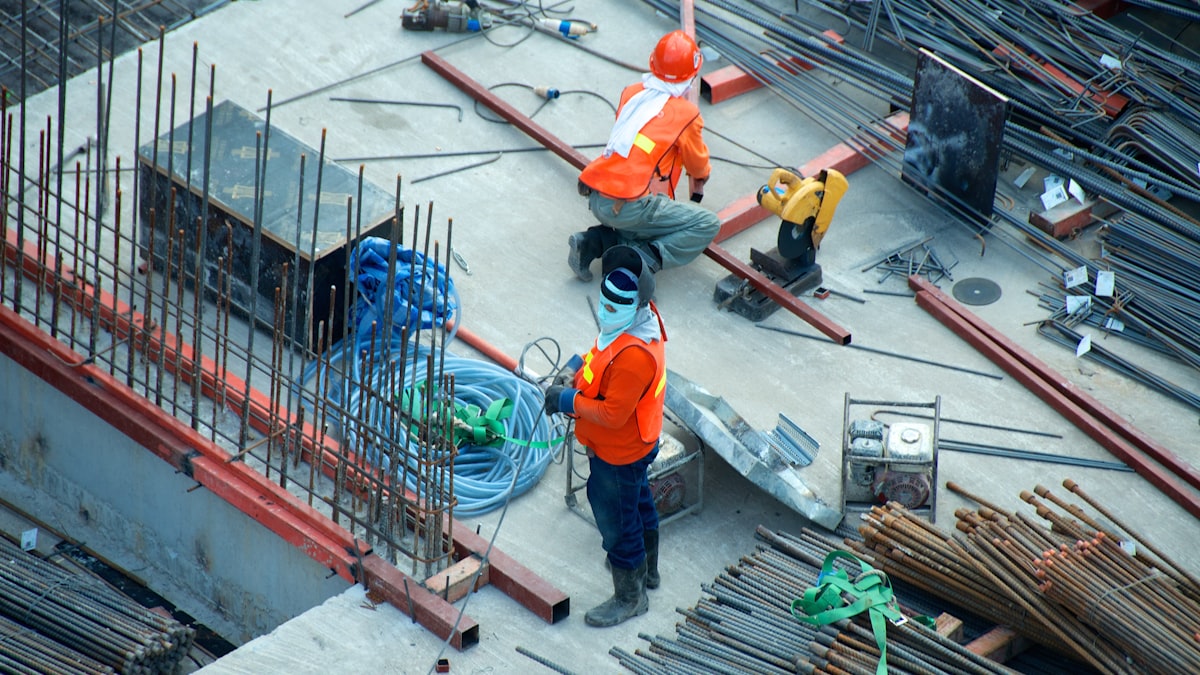
The Maharashtra Industrial Development Corporation (MIDC) is the state's primary industrial infrastructure body, managing 289 industrial areas across the state. For foreign companies, MIDC offers several critical advantages:
Land Allotment Process
MIDC provides industrial plots on a lease basis (typically 95-year leases) at pre-determined rates that are significantly below market prices. For Mega and Ultra-Mega projects, priority land allotment is available with additional exemptions from development charges. The allotment process for foreign companies follows these steps:
- Apply through the MAITRI 2.0 portal with project details and investment plan
- MIDC assesses land availability in the preferred industrial area
- Offer letter issued with plot dimensions, rate, and lease terms
- Execute lease agreement and pay the initial deposit (typically 10-15% of total premium)
- Obtain possession and begin construction within the stipulated timeline (usually 2-3 years)
Key Industrial Corridors
Foreign manufacturers should evaluate these strategic corridors:
- Pune-Nashik Industrial Belt: Automotive and engineering hub, home to Volkswagen, Mercedes-Benz, and 4,000+ auto component manufacturers
- Nagpur-MIHAN: Multi-modal International Hub Airport at Nagpur, with SEZ facilities for IT, aerospace, and logistics
- Aurangabad-DMIC Corridor: Part of the Delhi-Mumbai Industrial Corridor, featuring AURIC smart city with plug-and-play infrastructure
- Mumbai-Thane-Raigad Belt: Chemicals, pharmaceuticals, and IT/ITES cluster with proximity to JNPT port
MAITRI 2.0: Single-Window Investment Facilitation
Launched by Chief Minister Devendra Fadnavis on February 4, 2025, the MAITRI (Maharashtra Industry, Trade, and Investment Facilitation) 2.0 portal is a game-changer for foreign investors. The platform consolidates 119 services from 15 government departments into a single digital interface.
Key features relevant to foreign companies:
- Online application and tracking: Submit and track all investment-related applications in real-time
- Auto-approval system: Certain low-risk approvals are granted automatically, reducing processing time
- Deemed approval: If no decision is taken within the prescribed timeline, the application is deemed approved
- Dedicated relationship manager: Each foreign investment project is assigned a relationship manager for end-to-end facilitation

Sector-Specific Incentives for Foreign Investment
MIISP 2025 provides enhanced incentives for sectors aligned with India's strategic priorities:
IT, BPO, and Knowledge Process Outsourcing
IT/ITES units in Tier-2 cities receive up to 120% of FCI as incentives — the highest quantum available under the policy. This is designed to attract foreign technology companies to cities like Pune, Nagpur, Aurangabad, and Nashik. The incentive package includes enhanced IPS, additional capital subsidies, and priority infrastructure support.
Import Substitution Manufacturing
Foreign companies manufacturing products that are currently imported into India receive additional capital incentives and substantial reimbursement of R&D and technology transfer costs. This aligns with India's broader Production Linked Incentive (PLI) scheme and import substitution objectives.
Defence and Aerospace
Maharashtra is positioning itself as India's defence manufacturing hub. Under the automatic route, FDI up to 74% is permitted in the defence sector, with 100% allowed through the government approval route. The state offers additional incentives for defence offset obligations and partnerships with Indian defence PSUs.
Electric Vehicles and Green Energy
Foreign EV and renewable energy companies benefit from accelerated approvals, enhanced incentives, and access to dedicated industrial parks. Maharashtra's proximity to India's largest automotive clusters makes it ideal for EV supply chain development.
FDI Routes and Regulatory Compliance
Foreign companies investing in Maharashtra must comply with India's FEMA regulations and FDI policy requirements. The key compliance steps include:
Entity Formation
Most foreign companies set up a wholly owned subsidiary or a joint venture as a private limited company. The incorporation process through the SPICe+ portal takes approximately 10-15 business days and requires a resident director on the board.
FDI Reporting
Once shares are allotted to the foreign investor, the Indian company must file FC-GPR with the RBI within 30 days. Annual FLA returns must be filed by July 15 each year. Non-compliance with these deadlines can result in significant penalties — as documented in our analysis of FC-GPR filing penalties.
State-Level Registrations
Beyond central government filings, foreign subsidiaries in Maharashtra need:
- Maharashtra Shops and Establishments Act registration
- Professional Tax registration (unique to Maharashtra)
- Factory license (for manufacturing units) under the Factories Act, 1948
- Environmental clearances from MPCB (Maharashtra Pollution Control Board)
- GST registration with Maharashtra as the place of supply

Comparative Advantage: Maharashtra vs Other Indian States
While several Indian states compete for foreign investment, Maharashtra offers distinct advantages:
| Parameter | Maharashtra | Karnataka | Gujarat | Tamil Nadu |
|---|---|---|---|---|
| FDI Share (FY 2024-25) | 40% | 18% | 12% | 8% |
| Operational SEZs | 38 | 27 | 23 | 19 |
| Port Infrastructure | JNPT + 2 major, 48 minor | 1 major port | 2 major ports | 3 major ports |
| SGST Reimbursement | 100% (gross) | 100% (net) | 100% (net) | 100% (net) |
| Stamp Duty Waiver | 50-100% | 100% | 100% | 50-100% |
| Key Sectors | Auto, Pharma, IT, Finance | IT, Biotech, Aerospace | Chemicals, Pharma, Auto | Auto, Electronics, Textiles |
Step-by-Step Process for Foreign Companies
Here is the practical roadmap for a foreign company seeking to invest in Maharashtra under the MIISP 2025 framework:
- Pre-entry assessment: Verify FDI sectoral cap and route (automatic vs. government approval) for your industry
- Entity incorporation: Register a private limited company or foreign subsidiary through SPICe+
- MAITRI 2.0 registration: Register on the MAITRI portal and submit your investment proposal with project details
- Land identification: Work with MIDC to identify and secure industrial land or SEZ space
- Incentive application: Apply for MIISP 2025 incentives through the MAITRI portal within the prescribed timeline (typically before commencing commercial production)
- RBI compliance: File FC-GPR for foreign investment, obtain DSC, and complete all FEMA compliance requirements
- State registrations: Complete factory license, pollution control consent, professional tax, and other state-level registrations
- Commence operations: Start commercial production and begin claiming incentives (IPS claims are filed quarterly)

Key Takeaways
- Maharashtra's MIISP 2025 offers the most comprehensive incentive package among Indian states, with 100% SGST reimbursement, stamp duty waivers up to 100%, electricity duty exemption for 15 years, and interest rate subsidies of 4% for 10 years
- With 38 operational SEZs, 289 MIDC industrial areas, and strategic corridors like AURIC and MIHAN, the state provides ready infrastructure for immediate project deployment
- The MAITRI 2.0 portal consolidates 119 services from 15 departments, with deemed approval mechanisms that reduce bureaucratic delays
- Foreign companies in IT/ITES sectors can access up to 120% of FCI as incentives when setting up in Tier-2 cities
- All foreign investors must comply with FDI regulations, FEMA reporting requirements, and state-level registrations — professional advisory support is strongly recommended for first-time entrants
Frequently Asked Questions
What is the minimum investment required to qualify for MIISP 2025 incentives in Maharashtra?
There is no single minimum — it depends on the unit classification. MSMEs follow the Government of India classification (investment up to INR 50 crore in plant and machinery for medium enterprises). Large Scale Industries exceed the MSME threshold. Special LSI, Mega, and Ultra-Mega categories have progressively higher FCI and employment thresholds, with customized incentive packages available for the largest investments.
Can a 100% foreign-owned company claim Maharashtra industrial incentives?
Yes. MIISP 2025 incentives are available to all eligible industrial units regardless of ownership structure, provided the FDI complies with India's sectoral caps and FEMA regulations. A wholly owned subsidiary of a foreign company is fully eligible for IPS, stamp duty waivers, electricity duty exemptions, and all other incentives under the policy.
How long does it take to get land allotment from MIDC for a foreign company?
The standard land allotment process through MIDC takes 30-90 days from application submission, depending on land availability and project size. Mega and Ultra-Mega projects receive priority allotment, which can reduce the timeline to 15-30 days. The MAITRI 2.0 portal enables real-time tracking of the application status.
What is the difference between MIISP 2025 and the earlier PSI 2019 for foreign investors?
MIISP 2025 replaces PSI 2019 with several enhancements: the introduction of the Special LSI category with 100% SGST reimbursement, extended electricity duty waivers from 10 to 15 years, higher EPF reimbursement caps of INR 100 million per year for Special LSI units, and the integration of the MAITRI 2.0 digital platform for single-window clearance across 119 services from 15 departments.
Are SEZ benefits available in addition to MIISP 2025 state incentives?
SEZ benefits and state incentives operate under separate legal frameworks. SEZ benefits (duty-free imports, income tax deductions under Section 10AA) are governed by the SEZ Act, 2005 and central government policy. State incentives under MIISP 2025 (IPS, stamp duty waivers, electricity duty exemptions) are additional benefits from the Maharashtra government. However, certain incentives may not be stackable — companies should verify eligibility for each specific benefit.
Which Maharashtra cities offer the highest incentives for foreign IT companies?
Tier-2 cities in Maharashtra — including Nagpur, Aurangabad, Nashik, Kolhapur, and Solapur — offer the highest incentives for IT/ITES companies, with up to 120% of FCI available as incentives. Pune, while offering slightly lower quantum, provides the largest IT talent pool outside Mumbai and has well-established IT parks with plug-and-play infrastructure.
What environmental clearances does a foreign manufacturing company need in Maharashtra?
Foreign manufacturing companies need Consent to Establish (CTE) and Consent to Operate (CTO) from the Maharashtra Pollution Control Board (MPCB). Depending on the industry category (Red, Orange, Green, White), additional Environmental Impact Assessment (EIA) clearances from the Ministry of Environment may be required. Units in SEZs benefit from simplified environmental clearance processes through the zone's development commissioner.